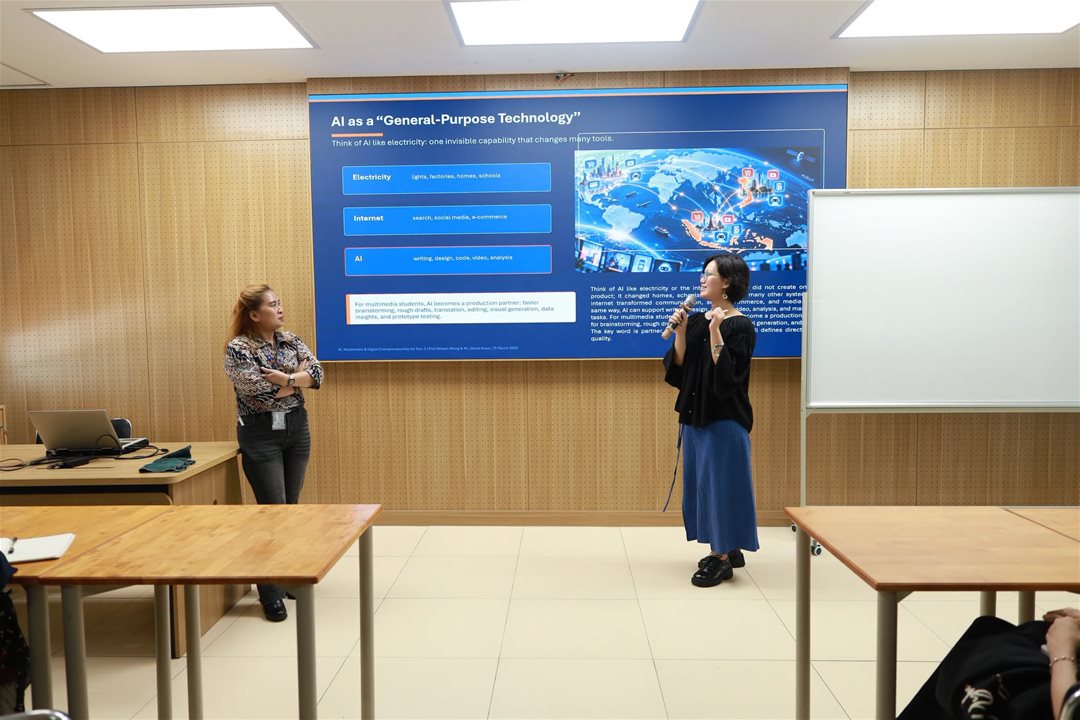
Originating from a faculty exchange program, connections between Lac Hong University (LHU) and Universitas Esa Unggul (UEU) have unlocked diverse avenues for academic exchange, technological collaboration, and practical engagement for both faculty members and students. This initiative also reflects how LHU systematically translates its internationalization strategy into concrete teaching and learning experiences.
In recent years, the internationalization of education has transcended formal cooperation agreements or short-term exchange programs. More importantly, it centers on the capacity to bring knowledge, pedagogical methodologies, technology, and cross-cultural perspectives closer to faculty members and students within their everyday academic environment. This core direction is actively advanced by Lac Hong University as it implements its LHU 2.0 vision.
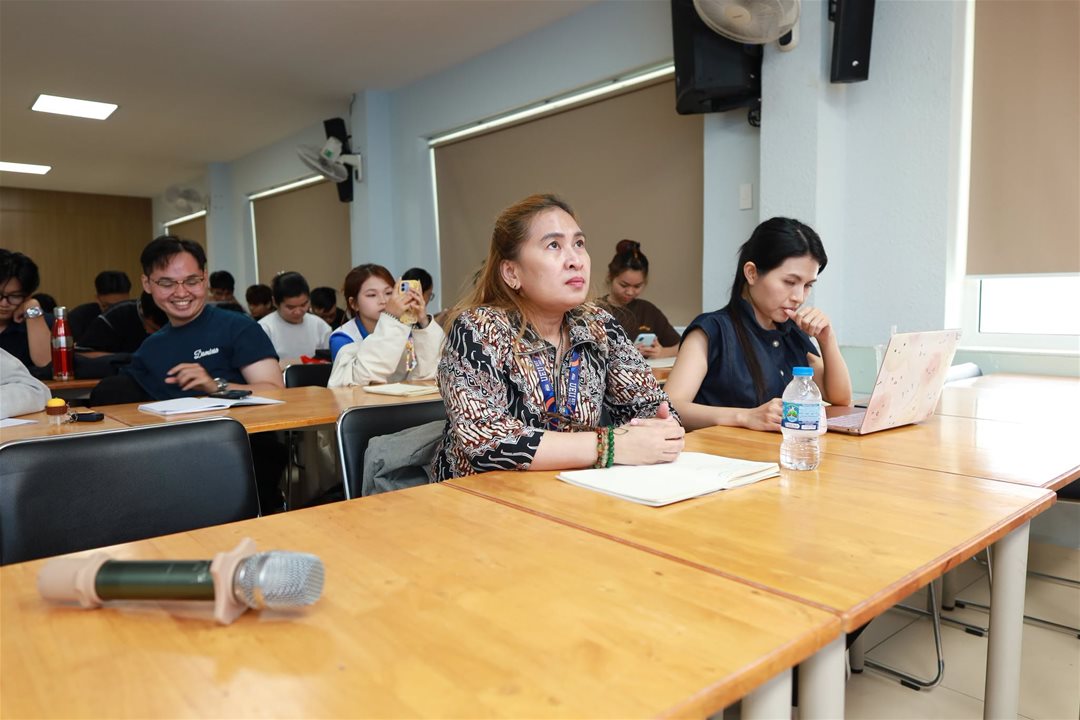
In March 2025, LHU officially announced its strategic partnership with Arizona State University (ASU) and Cintana Education, joining the ASU–Cintana Alliance—a global network of forward-thinking universities. According to ASU, this network aims to connect institutions to share best practices, expand faculty and student exchange opportunities, foster academic collaboration, and co-develop internationally benchmarked educational programs.
For LHU, this relationship not only broadens its international partnership channels but also facilitates access to broader academic resources, pedagogical frameworks, educational technologies, and an extensive university-industry network. LHU has actively participated in ASU–Cintana network activities, including the ASU–Cintana Presidents’ Summit in the United States in April 2025, alongside partner representatives from numerous countries.
From a Global Network to a Week of Immersive Experience at LHU
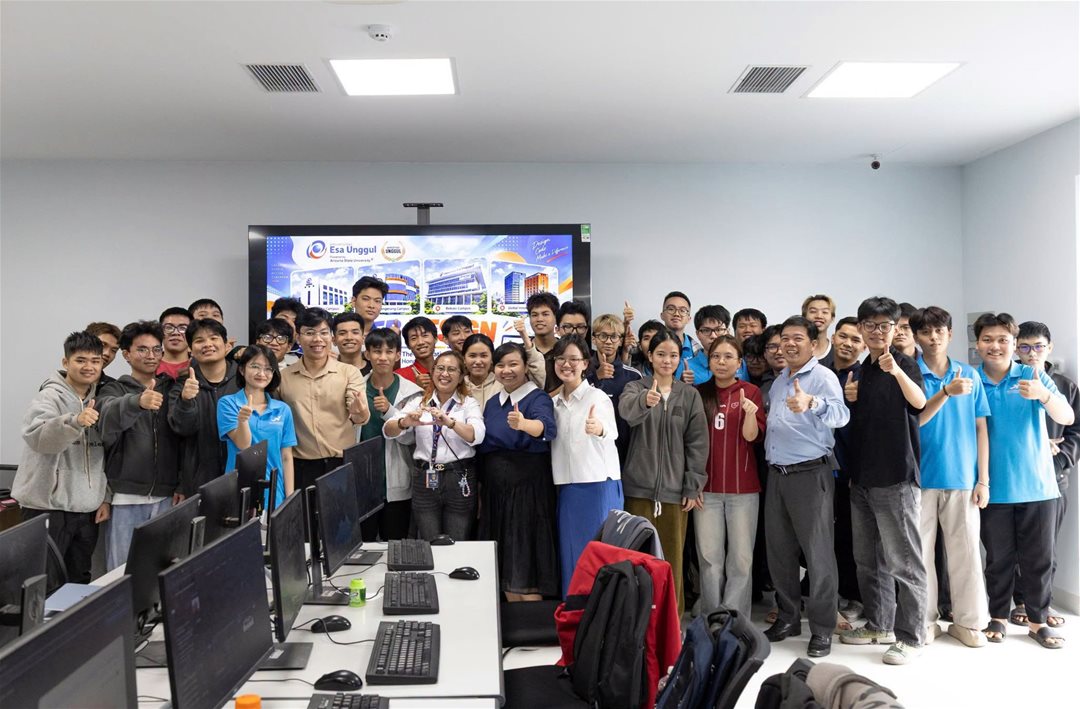
Within this flow of connectivity, the LHU × UEU Faculty Exchange Program, held from September 20–26, 2026, served as a tangible illustration of how international cooperation translates into practical academic operations. Within the framework of the program, Dr. Hani Dewi Ariessanti from Universitas Esa Unggul, Indonesia, engaged in collaborative work and professional exchanges with LHU faculty members and students, particularly within the Faculty of Information Technology. The significance of the program lay not in an isolated activity, but in an interconnected sequence spanning teaching, research, technology, student engagement, corporate alignment, and an international learning environment.
At the Faculty of Information Technology, Dr. Hani toured laboratory facilities and technology spaces including the Studio, T&A Lab, AI Lab, and iCommerce IT. These environments are integral to student learning, hands-on practice, content production, AI research, and technological product development. Through these tours, the infrastructure narrative extended beyond mere facility showcasing; Dr. Hani had the opportunity to explore how LHU students conceptualize ideas, build products, and deploy technology to solve real-world problems.
AI, Technology, and Classrooms Without Borders
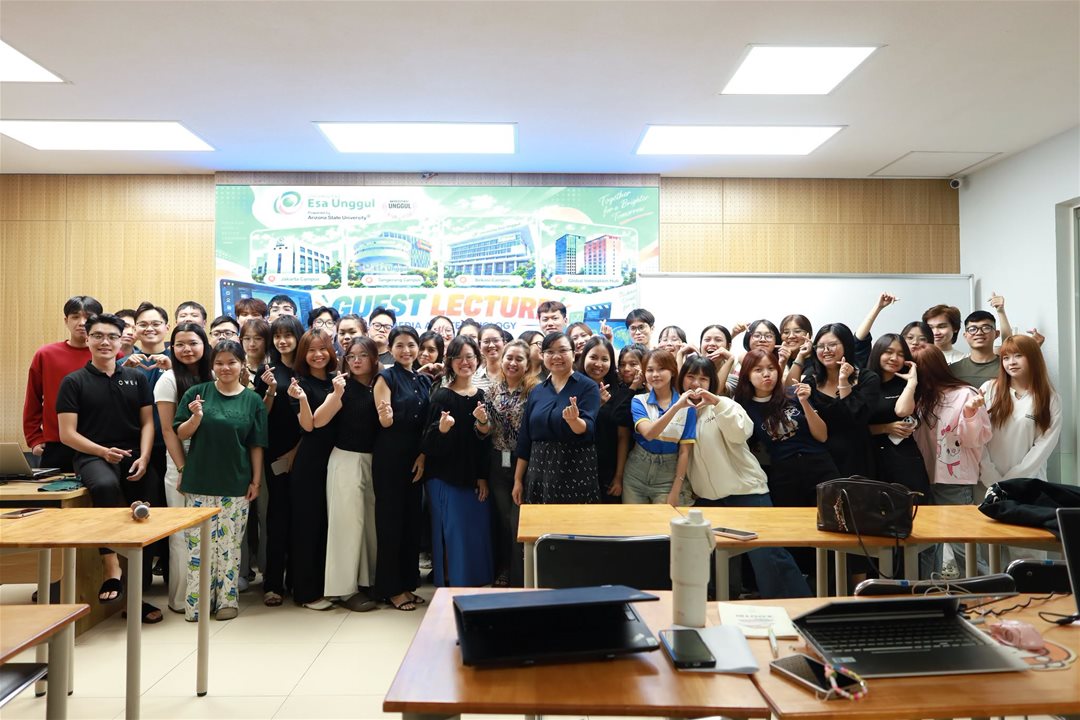
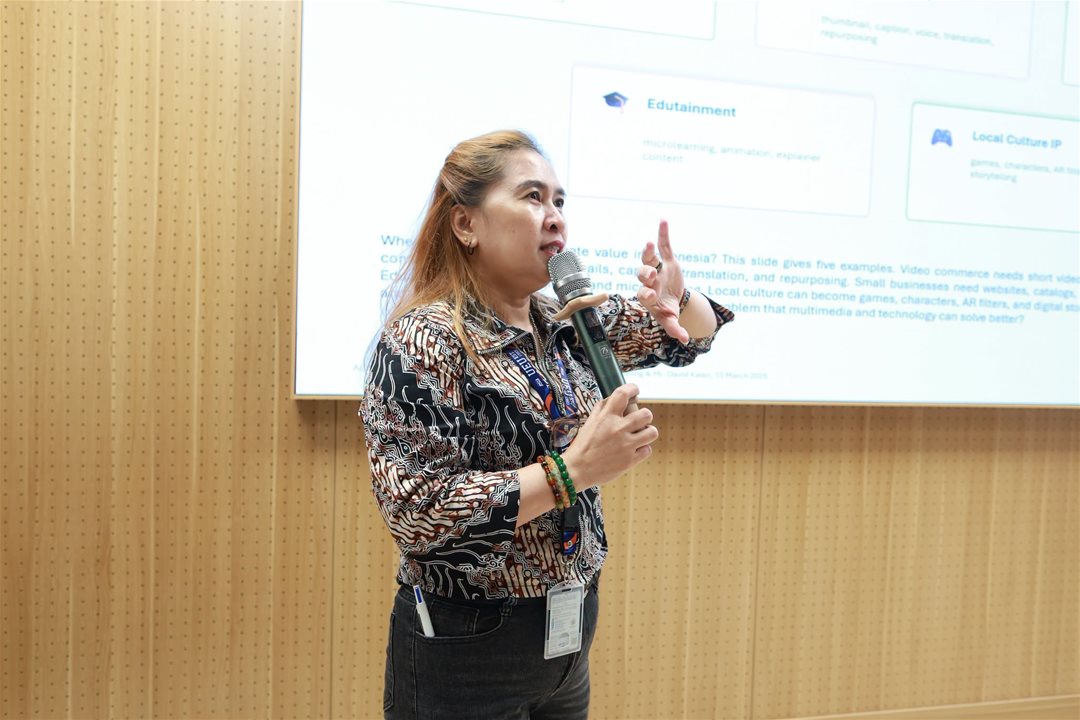
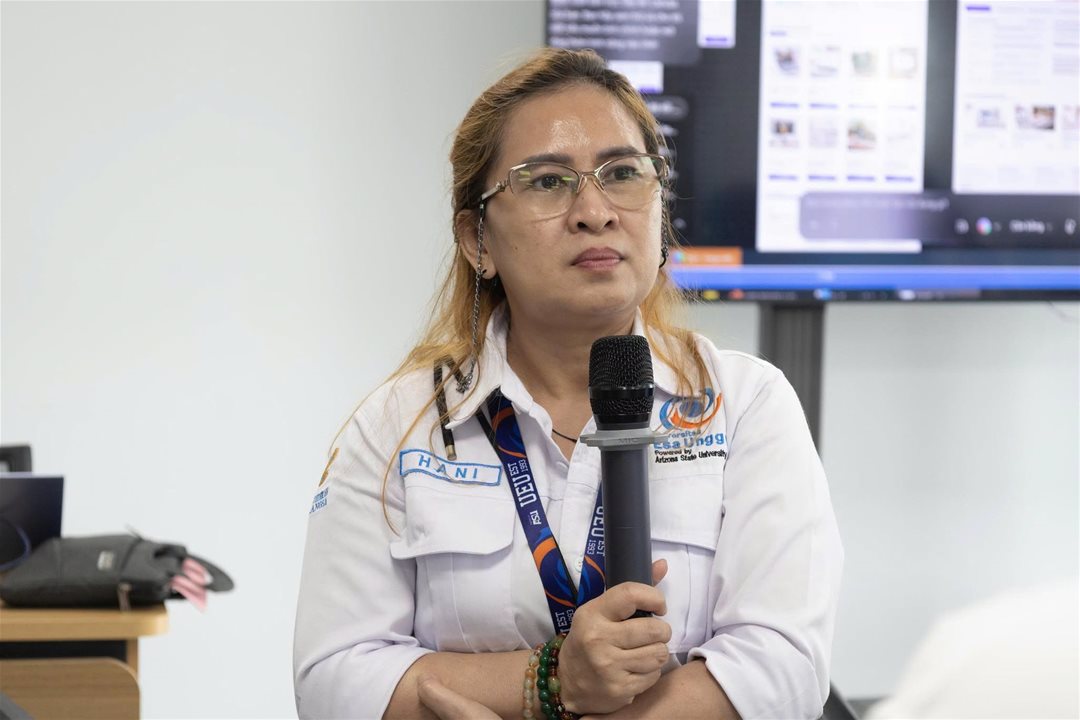
One of the highlights of the program featured professional sharing sessions focusing on technology and teaching methodologies. Dr. Hani introduced her research on the application of AR-MO in molecular visualization—an approach designed to help learners comprehend abstract concepts in chemistry that are difficult to observe directly. Building upon this research presentation, faculty members from both institutions exchanged insights on research methodologies, technology integration in teaching, and the organization of practical sessions. Extending beyond the technology domain, Dr. Hani also participated in teaching activities with Multimedia Communications students, leading a specialized session titled "Digital Transformation with the Power of AI: From Ideation to Business."
Here, artificial intelligence was approached not merely as a technical instrument, but as an integral component of ideation, content creation, and media product development. Consequently, students gained an alternative perspective on technology: moving beyond learning how to use tools to mastering how to formulate problems, exercise creativity, and transform technology into practical value.
When LHU Students Step into an International Evaluation Arena
Another milestone of the exchange program was Dr. Hani's participation in the Graduation Thesis Defense Council for the Faculty of Information Technology. The presented projects spanned a wide spectrum, including customer-support AI agents, local enterprise AI servers, plagiarism detection systems, treatment-support decision systems, web platforms, enterprise management tools, and AI-driven service applications. The direct involvement of an international faculty member in providing feedback and engaging in professional dialogue offered students an external perspective on problem framing, technological solution selection, and product development.
This embodies a core value of educational internationalization: students do not necessarily need to leave Vietnam to encounter global perspectives. Through programs such as LHU × UEU, classrooms, laboratories, and thesis defense panels transform into shared academic intersection points bridging diverse educational cultures.
The ASU–Cintana Alliance: From Institutional Ties to Human Connections
The true essence of initiatives like the LHU × UEU program lies in their capacity to turn a global network into concrete human connections. According to ASU, the ASU–Cintana Alliance is structured as a collaborative community where universities share experiences and generate cross-border learning, exchange, and partnership opportunities. Members gain access to student and faculty mobility pathways, academic collaborations, and international programs across the network.
From this perspective, LHU is not merely "partnering with ASU," but is progressively integrating into a broader educational ecosystem. This unlocks a fresh approach to internationalization: an Indonesian faculty member steps into a classroom in Dong Nai; an LHU student participates in an international competition in the United States; educators connect with peers across global institutions; and ideas spanning artificial intelligence, e-commerce, communications, and education continue to circulate across national borders.
Previously, in 2025, LHU representatives visited the United States under an invitation program hosted by ASU and participated in the Cintana Global Competition – Innovative Solutions for Sustainable Development 2025, featuring LHU faculty and students. Such milestones demonstrate that international networks only achieve true significance when they foster bidirectional journeys: bringing international knowledge to LHU while empowering LHU students and faculty to step out into the world.
From LHU to the World—and Back to the Classroom
Dr. Hani Dewi Ariessanti's visit extended far beyond a routine one-week faculty exchange. It represents a concrete cross-section of LHU's internationalization journey—where international cooperation transforms into academic experience, technology permeates the classroom, students encounter fresh perspectives, and educators glean insights from global peers.
From the opening session, lectures, laboratories, and thesis defense panels to discussions on research and technology, each activity contributes another connection to an expanding network. As these connections continue to thrive, the value of international cooperation resides not merely in physical travel to foreign shores, but in the ability to bring the world into the lecture hall and project ideas born at LHU out to the global stage.